10 Essential Steps for Smooth Registration of Startups in India with Bizsimpl
10 Essential Steps for Smooth Registration of Startups in India with Bizsimpl India has evolved…



Registration of startups in India is the first critical step for turning an innovative idea into a legally recognized and investor-ready business. If a startup is not registered, founders struggle with basic necessities like opening a current bank account, protecting ownership, signing contracts, onboarding investors, or accessing government benefits.
India’s thriving startup ecosystem — especially cities like Bengaluru — is known for tech innovation and entrepreneurial success. However, many first-time founders find business incorporation confusing due to legal formalities, documentation, and compliance requirements.
This guide makes everything simple. You will learn the complete process for the registration of startups in India, documents needed, how long it takes, common mistakes, and how experts like BizSimpl support you from idea to incorporation smoothly.
Once registered, your startup becomes a separate legal identity. This ensures:
Most founders choose to register early because companies that stay unregistered face delays, missed funding opportunities, and legal risks.
The registration of startups in India primarily happens through one of these three legal structures:
| Entity Type | Best For | Ownership | Compliance Level | Funding Ready |
|---|---|---|---|---|
| Private Limited Company | Tech startups, VC-funded startups | Directors + Shareholders | High | ⭐⭐⭐⭐⭐ |
| LLP | Service businesses, professional firms | Partners | Moderate | ⭐⭐⭐ |
| OPC | Solo founders starting small | One owner | Moderate | ⭐⭐⭐ |
Tip:
If you are looking for angel or VC investment, Private Limited Company is the preferred choice.
BizSimpl helps founders evaluate the right option based on their business model, growth goals, and team.
To begin the registration of startups in India, founders must ensure:
✔ A valid business idea aligned with startup definition
✔ Minimum 1 director/partner (age 18+)
✔ Indian or foreign founders can participate
✔ Registered office address in India
✔ Documents and KYC ready for all stakeholders
✔ Digital signatures (DSC) and Director Identification Number (DIN) can be obtained
No minimum capital is required for modern startups — even ₹1 is acceptable while incorporating a company.
A smooth registration of startups in India requires proper documentation for founders and the startup:
BizSimpl ensures documentation is accurate from day one so founders avoid delays in submission or approval.
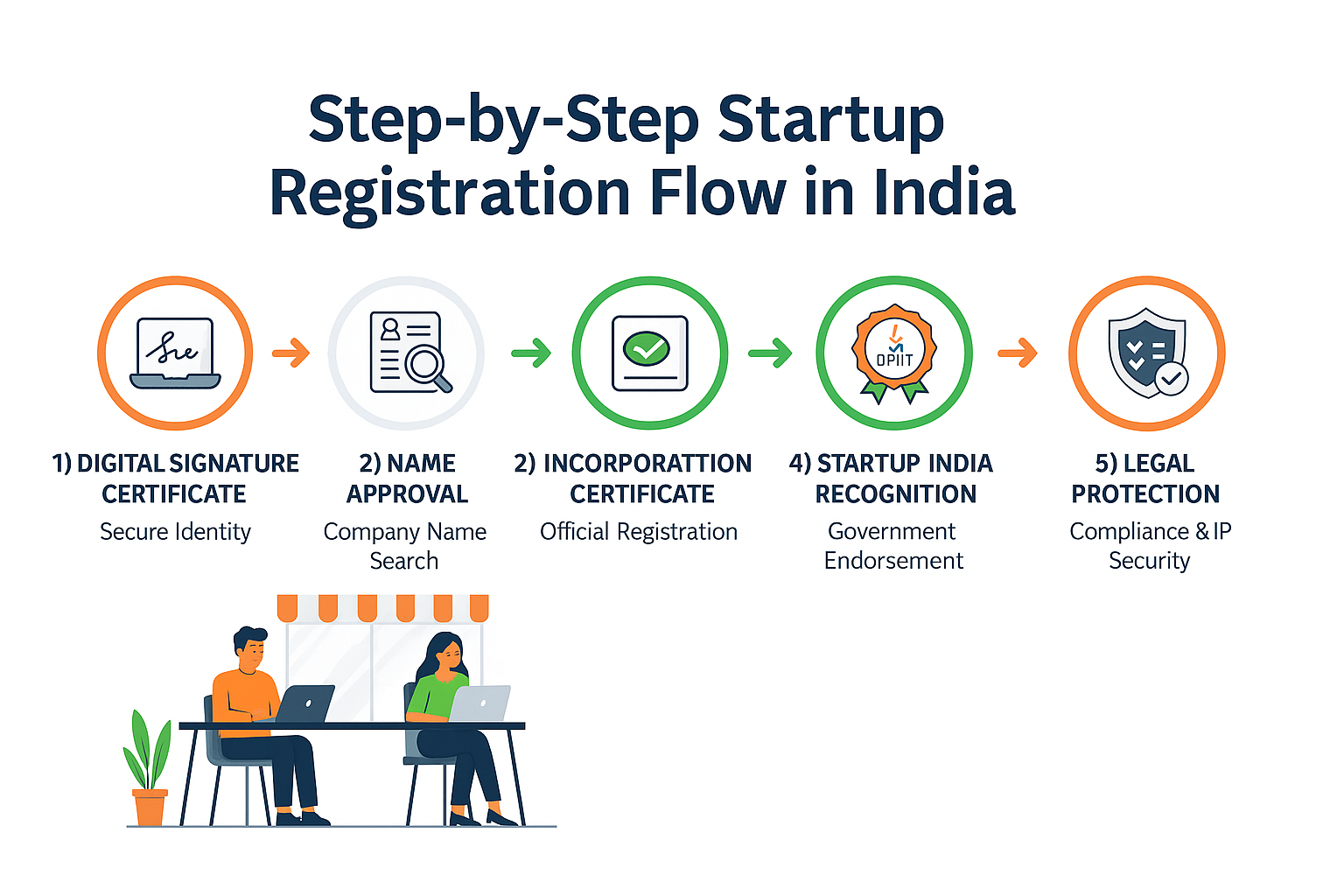
The process depends on your chosen structure. Here is the standard incorporation flow followed by most modern businesses:
Directors and partners require a DSC to sign forms electronically.
📌 Processing Time: 1–2 days
Mandatory for Private Limited Company directors.
📌 Processing Time: Usually along with incorporation forms
Name must be unique and not conflict with existing businesses or trademarks.
📌 1–3 working days depending on approval
This includes:
📌 This is the most crucial step in the registration of startups in India
Issued by Ministry of Corporate Affairs once approved.
📌 Startup becomes legally recognized
Government documents help in account opening quickly
Once the Certificate of Incorporation is issued:
This recognition offers tax benefits, funding support, and easier IP filings.
Many investors prefer DPIIT-recognized startups.
Startup founders prefer BizSimpl because:
From documentation to name approval and incorporation, BizSimpl makes the registration of startups in India simple and stress-free.

Every startup wants faster approval, especially when product development or investor conversations have already begun. Here is a realistic timeline founders can expect:
| Stage | Estimated Time |
|---|---|
| DSC creation | 1–2 days |
| Name approval | 1–3 days |
| Incorporation filing & approval | 5–7 days |
| Bank account opening | 2–4 days |
| DPIIT Recognition (if eligible) | 7–14 days |
📌 With complete documents and expert handling, 10–15 working days is enough for successful registration of startups in India.
Delays happen mainly due to:
BizSimpl ensures faster turnaround by preventing such common issues.
Founders often rush incorporation without understanding requirements. The most frequent mistakes include:
❌ Choosing the wrong business structure
❌ Submitting unclear documents or incorrect KYC
❌ Selecting a trademark-conflicting company name
❌ Not drafting a proper shareholding structure
❌ Assuming GST or trademark is included in registration
These issues cause weeks of delay.
A correct approach includes:
✔ Evaluate long-term scalability
✔ Prepare structure and capital allocation in advance
✔ Name check before filing
✔ Expert documentation and compliance support
BizSimpl helps founders move confidently without trial-and-error.
A SaaS co-founder team in Bengaluru needed quick incorporation to close an angel investment. BizSimpl:
Outcome → They secured funding within the same month and onboarded their first enterprise client confidently.
Stories like this are becoming more common as India strengthens its startup ecosystem.
Here’s what every founder should remember:
1️⃣ Is there a minimum capital required to register a startup?
No. Even ₹1 capital is allowed while incorporating most startup structures.
2️⃣ Can a single founder register a startup in India?
Yes. OPC (One Person Company) is designed for solo founders. Pvt Ltd requires minimum 2 directors.
3️⃣ What is the fastest way for registration of startups in India?
With complete KYC documents and expert assistance, registration can be completed in 10–15 working days.
4️⃣ Is registration mandatory for raising investment?
Yes. Investors generally require a registered company with clear shareholding before funding.
5️⃣ What is the difference between incorporation and DPIIT Recognition?
Incorporation creates your legal entity;
DPIIT Recognition gives startup benefits, funding access, IP support & tax exemptions.
6️⃣ Can foreign citizens register a startup in India?
Yes. Foreign founders can participate in Pvt Ltd companies following compliance norms.
The registration of startups in India is the foundation for innovation, growth, and fundraising. A properly incorporated business builds trust among investors, customers, and partners from day one.
BizSimpl helps founders choose the right structure, prepares compliant documentation, handles all MCA filings, and guides DPIIT recognition — so entrepreneurs can focus on building the next big thing.
Start your incorporation journey today with expert support — and make your business official with confidence.

10 Essential Steps for Smooth Registration of Startups in India with Bizsimpl India has evolved…

10 Key Insights into Company Registration in Bangalore with Bizsimpl Bangalore, also known as the…

7 Essential Steps for Registration of Startups in India with Bizsimpl Starting a business in…