10 Essential Steps for Smooth Registration of Startups in India with Bizsimpl
10 Essential Steps for Smooth Registration of Startups in India with Bizsimpl India has evolved…



Starting a company in India has never been more exciting — or more rewarding. With the Indian startup ecosystem booming and government initiatives like Startup India making entrepreneurship simpler, knowing how to complete your company registration in India correctly can make all the difference.
In this 2025 updated guide, we’ll walk you through the entire company registration process in India, step-by-step — from choosing the right business structure to filing your incorporation documents online. Whether you’re an entrepreneur, freelancer, or foreign investor, this blog will help you understand everything you need to know about company registration in India and how Bizsimpl can simplify it for you.
Company registration in India is the legal process of forming a business entity under the Ministry of Corporate Affairs (MCA). It gives your business a recognized legal identity, allowing it to:
In simple terms, company registration in India transforms your business idea into a legitimate, recognized entity ready to do business.
As the digital economy grows, company registration in India is not just a legal formality — it’s a growth strategy. Here’s why:
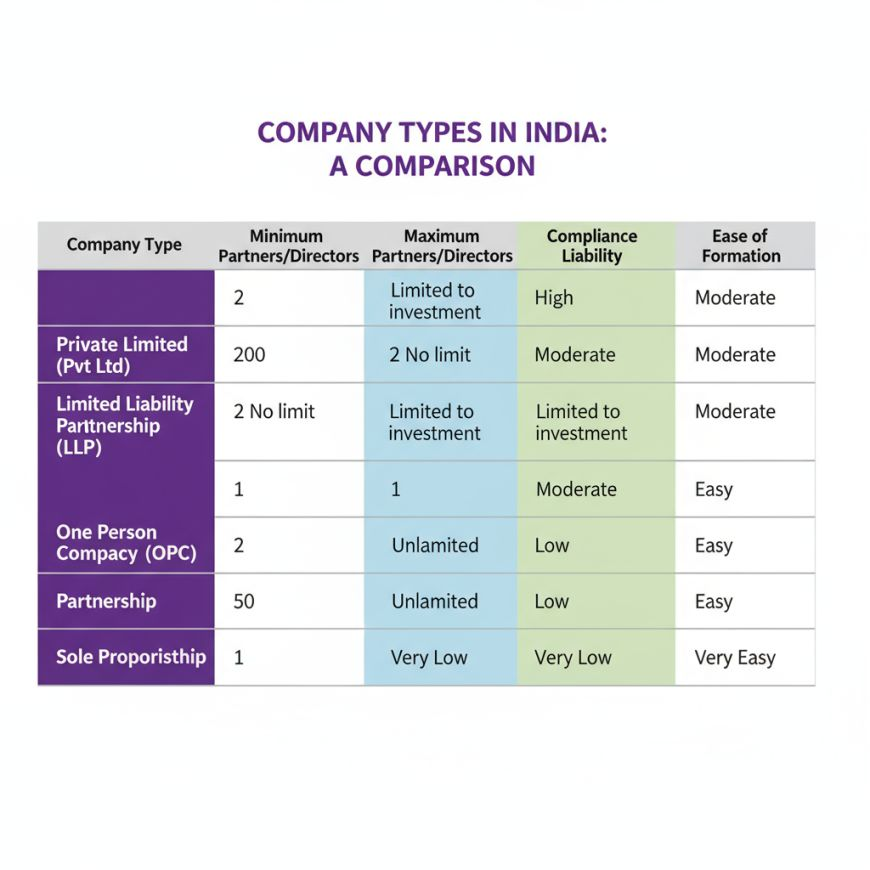
Before beginning your company registration in India, it’s crucial to choose the right structure based on your business goals, size, and future plans. Here are the most popular options:
The most preferred structure for startups and growing businesses.
A mix of partnership and private limited company benefits.
Perfect for solo entrepreneurs who want limited liability.
A traditional form of business where two or more people manage operations.
Simplest business form with one owner controlling everything.
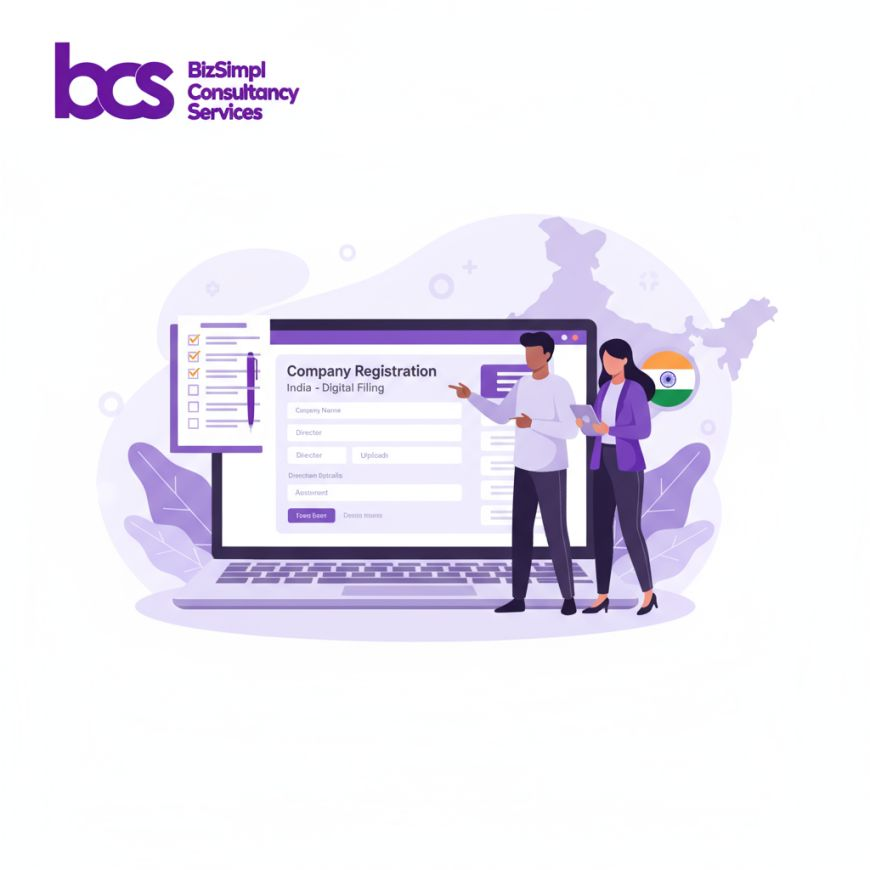
Thanks to MCA’s Digital India initiative, online company registration in India is now fully paperless and can be completed from anywhere. Here’s a simplified step-by-step process:
Your company name should be unique, brandable, and not resemble any existing business name or trademark. You can check name availability on the MCA portal before proceeding.
Every director must have a Digital Signature Certificate to sign e-documents online. DSC is mandatory for filing company registration forms digitally.
Each proposed director needs a DIN, which can be applied for along with the incorporation form.
The SPICe+ (Simplified Proforma for Incorporating Company Electronically Plus) form integrates multiple services:
This form is the heart of the online company registration process in India.
The Memorandum of Association (MOA) and Articles of Association (AOA) define your company’s purpose, scope, and operating rules. These are filed digitally along with the SPICe+ form.
Once your documents are verified by the Registrar of Companies (ROC), you’ll receive the Certificate of Incorporation, which officially marks the birth of your business entity.
When filing for company registration in India, keep the following documents ready to avoid delays:
For Directors and Shareholders:
For Registered Office Address:
Having these documents in digital form speeds up your online company registration process.
The cost of company registration in India varies depending on the type of company and the number of directors. Here’s a general estimate:
| Type of Company | Approximate Cost (₹) | Government Fees Included |
|---|---|---|
| Private Limited Company | ₹7,000 – ₹12,000 | Yes |
| LLP (Limited Liability Partnership) | ₹6,000 – ₹10,000 | Yes |
| One Person Company | ₹6,000 – ₹9,000 | Yes |
| Partnership Firm | ₹2,000 – ₹5,000 | Optional registration |
| Sole Proprietorship | ₹1,500 – ₹3,000 | Minimal requirements |
Note: Bizsimpl offers transparent, affordable, and all-inclusive packages for all forms of company registration in India — with zero hidden costs and full expert assistance.
Understanding the process of company registration in India is crucial for entrepreneurs who want to build a legal and credible business entity. With Bizsimpl, the entire registration process becomes streamlined and hassle-free.
Here’s a complete step-by-step breakdown:
A Digital Signature Certificate (DSC) is mandatory for all company directors and shareholders to sign electronic documents during registration.
Bizsimpl assists in generating DSCs quickly to save your time during the company registration process in India.
Next, every proposed director must have a Director Identification Number (DIN). This unique number is required when filing for incorporation with the MCA (Ministry of Corporate Affairs).
Bizsimpl ensures accurate DIN filing and avoids document rejections — one of the most common delays in online company registration in India.
Choosing the right company name is vital. It should be:
Through the SPICe+ form on the MCA portal, Bizsimpl applies for name approval, ensuring your chosen name complies with all MCA naming guidelines.
The Memorandum of Association (MOA) and Articles of Association (AOA) are foundational legal documents that define your company’s objectives, structure, and internal management rules.
Bizsimpl drafts precise and legally sound MOA and AOA tailored to your company’s goals — making the company registration process in India smoother.
The SPICe+ form (Simplified Proforma for Incorporating Company Electronically) integrates several registration steps into a single form, including:
Bizsimpl’s experts handle the SPICe+ filing end-to-end, ensuring there are no errors or delays in the company registration process.
Once the Registrar of Companies (ROC) verifies and approves your application, you’ll receive the Certificate of Incorporation — an official document confirming that your business is legally registered.
This certificate includes:
At this stage, your company registration in India is officially complete.
The cost of company registration in India depends on factors like the type of company, number of directors, authorized capital, and government fees.
Here’s an approximate breakdown:
With Bizsimpl, all pricing is transparent — no hidden charges. You get expert assistance, documentation, and government filing support at competitive rates.
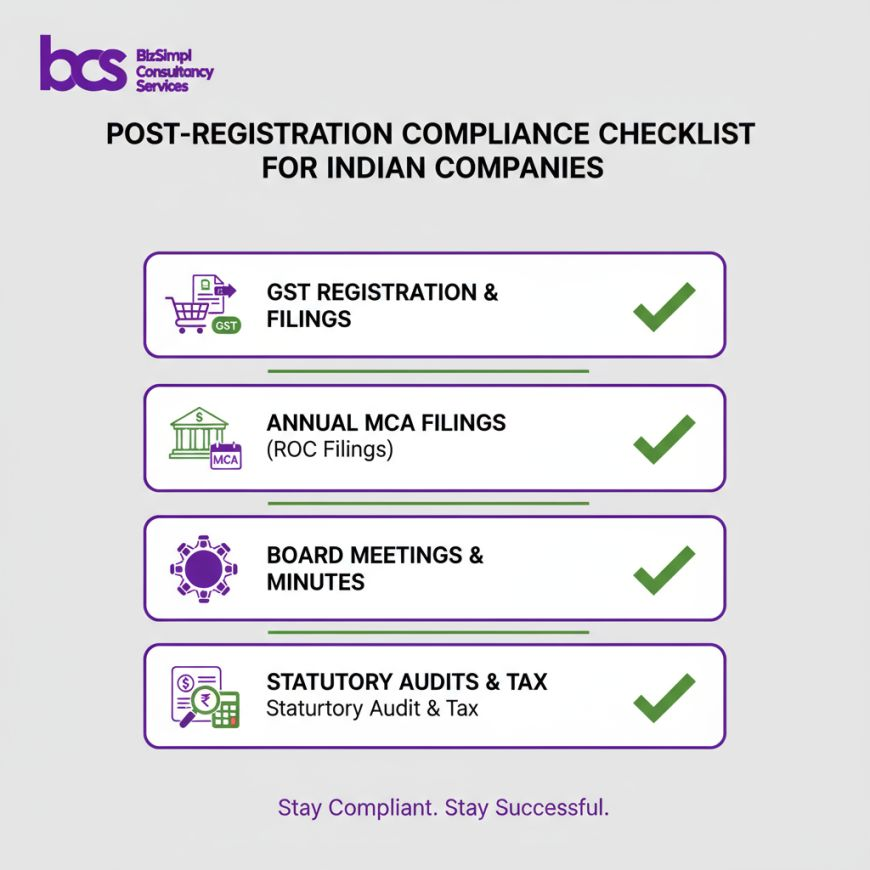
Once your company registration in India is complete, several compliance steps must be followed to keep your business legally active:
Bizsimpl helps you manage all post-registration compliances so you can focus on scaling your business.
When it comes to company registration in India, choosing a trusted partner can make all the difference. Here’s why thousands of startups and entrepreneurs prefer Bizsimpl:
From choosing the right structure to document filing and compliance, Bizsimpl handles everything efficiently.
The entire company registration process is digital — no physical visits or paperwork required.
Bizsimpl offers cost-effective company registration packages tailored to startups, SMEs, and entrepreneurs.
Your company can be registered in as little as 5–7 business days with Bizsimpl’s streamlined system.
Stay compliant year-round with Bizsimpl’s compliance experts who manage filings, renewals, and updates.
1. How long does it take to register a company in India?
Typically, it takes 5–10 working days, depending on government approval and documentation accuracy.
2. Can a foreign national register a company in India?
Yes. Foreign nationals can register a Private Limited Company with at least one Indian resident director.
3. What are the minimum requirements for Private Limited Company registration?
4. Is GST registration mandatory after company registration?
Not always. It’s mandatory only if your annual turnover exceeds the threshold limit or you provide interstate services.
5. Can I register my company online without visiting any office?
Absolutely! With Bizsimpl, the entire company registration in India process is 100% online.
6. Why is company registration important for startups?
It builds legal credibility, attracts investors, protects your brand, and enables tax and funding benefits under Startup India.
Registering your company in India shouldn’t be complicated — and with Bizsimpl, it isn’t. Whether you’re an aspiring entrepreneur or a growing business, we simplify every step of the process — from choosing the right business structure to managing compliance after incorporation.
Bizsimpl helps you register:
All within a few clicks!
👉 Visit bizsimpl.com to start your Company Registration in India process today.
Let experts handle the legalities while you focus on building your dream business.

10 Essential Steps for Smooth Registration of Startups in India with Bizsimpl India has evolved…

10 Key Insights into Company Registration in Bangalore with Bizsimpl Bangalore, also known as the…

7 Essential Steps for Registration of Startups in India with Bizsimpl Starting a business in…